
People want tools that fit into life, not the other way around. Smart ring do that. They sit on a finger and quietly track health. They check sleep, heart rate, steps, and more. You do not need to think about them. They work in the background and show useful info when you want it.
Why it matters
Most of us have busy days. Sleep gets cut short. Stress grows without warning. Small changes in daily habits add up over months and years. A smart ring helps spot those small changes. This also means that you can keep a tab on your health and notice subtle changes, and take corrective actions if required.
What a smart ring does
At first glance, a ring looks like a piece of premium jewelry. Under the surface, it holds sensors and runs with the help of software. These sensors read tiny signals from the body. The software turns those signals into simple data you can read on your phone.
Main features:
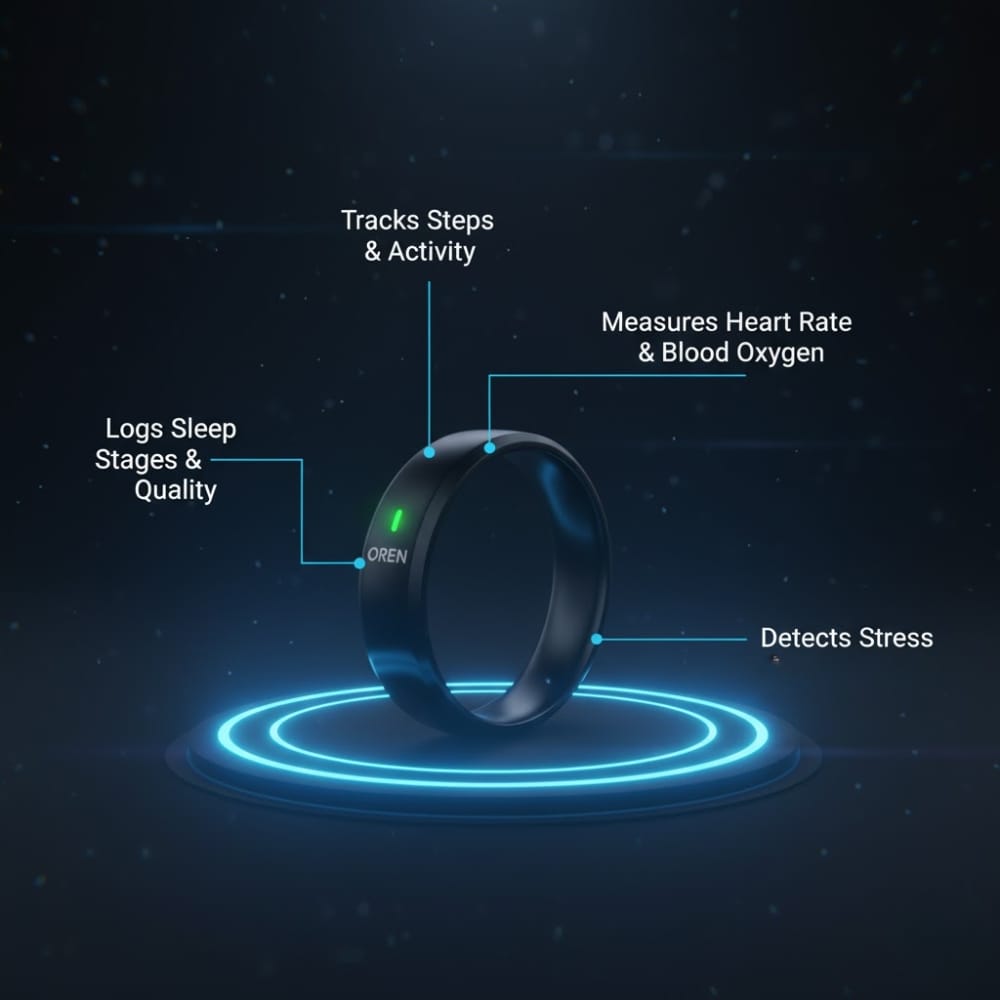
- Tracks steps and activity every day.
- Logs sleep stages and sleep quality.
- Measures heart rate and blood oxygen.
- Notes signs of stress by tracking heart patterns.
- Some models use NFC or Bluetooth for extra features.
How people use smart rings
A few real-world examples make it clear why rings are useful.
A student who stays up late can see how poor sleep hits focus the next day.
A person who sits at a desk all day can notice low movement and set a small step goal.
A busy parent can check sleep trends and tweak their bedtime routine.
A sportsperson can track recovery and avoid overtraining.
These are small changes. They feel simple. They add up fast.
Everyday benefits
Smart rings do not promise instant fixes. They offer steady, daily feedback. That matters because real change happens with steady feedback.
- Better sleep: The ring shows when deep sleep happens and gives you insight on your sleep patterns. This means that you can take corrective actions – move bedtime or cut late caffeine.
- Clear goals: Seeing steps and activity makes it easier to hit small targets. Want to complete 10,000 steps every day? Now you know where you stand.
- Lower stress: If heart patterns show stress, a short walk or a break helps.
- Recovery: Keeping a track of workout levels and stress levels, one can also focus on a recovery plan that works.
Choosing a ring that works
A few practical checks make choosing easy.
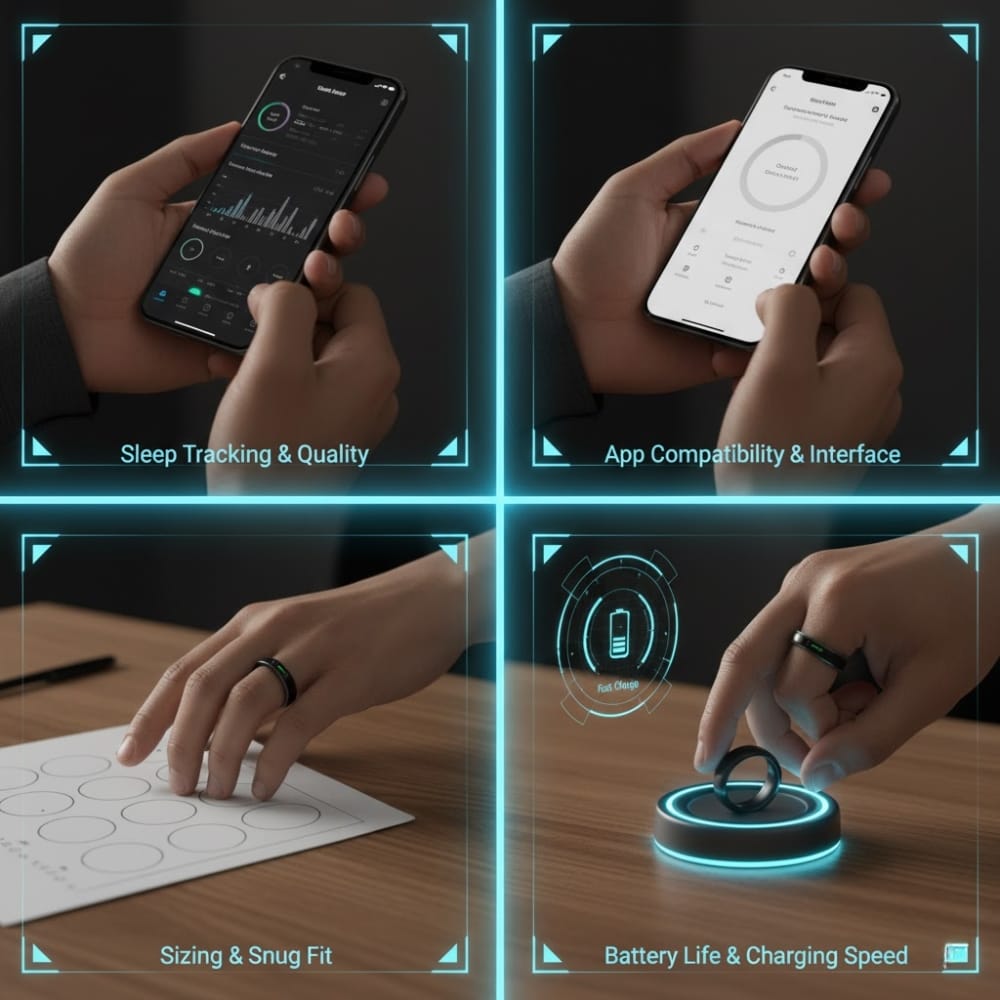
- Look for the features you need. If sleep matters most, pick a ring with deep sleep tracking.
- Make sure it talks to your phone. The app should be simple and clear.
- Try a size chart. A snug fit reads better than a loose one.
- Check battery life and charging time. Longer life and quicker charging means less fuss.
Who should get one
Anyone can get a smart ring. It is a very easy to use and simple to wear device. People who don’t like smartwatches or wrist bands because of the bulk can definitely use one. They help anyone who wants to check sleep, stress, or daily activity. They also suit people who like simple gadgets that do not shout.
Seniors can use them to watch heart trends. Office workers can use them to spot long stretches of inactivity. Students can use them to track sleep so study time feels sharper.
What to expect next
Rings will keep getting better. For instance, the Oren Mate smart ring has a gesture control feature. You can control your presentations and phone camera with a simple gesture through the ring. The industry will keep evolving. Newer models will add more health checks and smarter apps. They may talk to other home devices or alert a trusted contact in urgent situations. For now, they offer a quiet, simple way to pay attention to health each day.
FAQs
1. What is a smart ring and how does it work?
A smart ring is a small wearable that records health signals using tiny sensors. It sends the data to your phone so you can check sleep, heart rate, steps, and trends over time.
2. Can a smart ring track sleep well?
Yes. Most smart rings track sleep stages and give a sleep score. That makes it easier to spot patterns and improve routines.
3. Are smart rings for men and women?
Definitely. There are unisex designs and styles aimed at both men and women. Choose by comfort, look, and the features you want.
4. How is a ring different from a fitness band?
Rings are smaller and less visible. They’re easier to wear overnight and during work. Bands may offer more screen-based controls, but rings win on comfort and subtlety.
5. How long does the battery last?
Many smart rings last several days on a single charge. Exact life depends on the model and how often you use extra features.
6. Can I track workouts with a ring?
Yes, most rings log steps, active minutes, and exercise sessions. For GPS-based run maps, some people pair the ring with a phone app or use a watch instead.
7. Are smart rings worth it?
If you want continuous health data without a bulky device, yes. They give a clear picture of sleep and recovery, and that can help you make smarter daily choices.
Final thought A smart ring does a lot without asking for attention. It sits on the finger, collects steady data, and gives clear ideas you can act on. For anyone who wants a small, low-fuss way to track health, a smart ring makes sense. It helps you sleep better, move more, and catch stress sooner. Small steps. Better habits. A healthier life.
Explore the world of smart rings today and elevate your wellness journey with a device that fits right on your finger!

